Monday, January 30, 2012

Changing Times call for New Approaches to Marketing


If you make your living as an artist, as I do, you've probably seen a major change in the purchasing habits of Americans since the end of 2008. The last three years have been a challenge, to say the least. I've paid the bills OK, but pulled the belt tighter on dog treats, trips to the country and dinners out. And, the salvation army is getting fewer of my clothes, as I'm hanging onto the fashions a bit longer than usual...overlooking a frayed sleeve or balled sweater in favor of a thicker wallet.

In the past, I've been 99% commissioned as a painter. All of my work is paid for before I paint it. But, I'm getting fewer calls as our sluggish economy drags on with little recovery. So, the other day I decided that I needed to change my strategy. And I asked myself, "Where are the buyers of art going to buy art these days?" And that's when I decided to find out where the best art fairs in the nation were located. It turns out that Scottsdale, Arizona is a really hot art market...and that's not a bad place to be in February. So, I got my stuff together and was juried into the Waterfront Thunderbird Art show in Scottsdale, Arizona...my first art show ever. Then I borrowed a tent and displays and spent a month framing paintings..all the while crossing my fingers that this leap of faith would bring me the sales and exposure I've been hoping for.

Sometimes we have to do these things...to take well planned leaps in the hopes of landing someplace we dream of being. I did it many years ago when I left the comfort of a job and started my own ad agency, then again when I started studying singing and then again when I starting singing professionally. Each time, I felt a sense of joy at the moment of the leap (mixed a little with fear) but never a sense of dread or of wanting to escape current circumstances. I feel that joy now as I prepare for this long trip across country with my paintings in tow. Images of hope and optimism fill the trailer and fuel my heart.

I'll let you know how it goes.

Friday, January 20, 2012

Social Outreach

This morning I stretched my social net--and took a chance. I find it's always difficult trying something new, particularly when it's public. I posted a video on Kickstart.com of a project that I'm hoping can be funded with donations from my friends, family and as yet unknown patrons of the arts.

The link is:
http://www.kickstarter.com/projects/116318509/sunland-school-hands-on-mural-project

I'd love your feedback on it and any support you can offer. At the moment, we only have $1...so I'm feeling a little dejected.

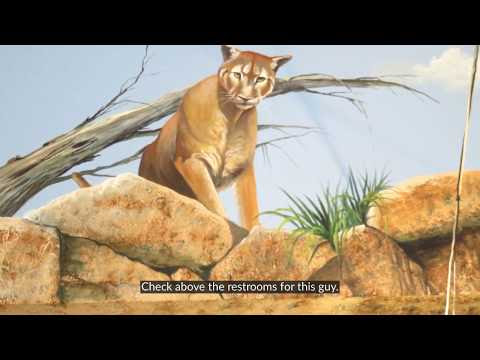
The mural project is for a wonderful school in south Phoenix that is in a Title 1 district. Title 1 is a federal grant program for improving the academic achievement of the disadvantaged. If we get to our goal for funding, the mural will grace the walls of a new art corridor outside the school. These murals make an incredible impression on the kids as you can kind of see on the faces of the students from my past murals. I've done 25 of these in Michigan. This will be the first one in a school district that needs a little assistance in raising the funds.

I'm hoping we reach our goal by February 18th, I'll keep you posted!

Friday, January 6, 2012

Painting Bryce Canyon


The photo this painting is based on was taken during a semi-cloudy day in Bryce Canyon. Any day there is an extraordinary day. The rock colors are particularly difficult to capture. They change moment by moment as the light moves around them. In this painting I used a series of reds from warm to cool to show the subtle light play. The rocks with the most sun on them are the warmest, including the shadows. That is the most difficult concept to understand. The shadows are actually much warmer than normal. I believe this is due to the bounced light from the red rocks themselves. It's not apparent in the photo, as the camera tends to interpret shadow as a cool tone, but since I was there, I remember the colors vividly.

Using watercolors to depict reds can be challenging. The color rarely dries with the intensity that you intended, and placing a second coat on the painting often takes away the freshness. I found myself using colors directly out of the tubes for this painting. Colors like Scarlet Lake, Opera Rose and Vermilion were placed directly on the image and then I held my breath as they slowly lost some of their intensity. In some cases, I removed a tiny bit of the brilliance by placing a cool tone quickly over the top before it was completely dry, or I removed some of the color with a dry brush after the image had dried. I hope you like the results.

Saturday, December 31, 2011

Grey Gray Grey….The Last Day of 2011


On days like today, it's challenging to be a pleinair painter unless you like to work in charcoal. That's why I'm staying indoors for the 10th day in a row and working on paintings in my studio. Although some artists would tell you that you should be able to find beauty in anything, including a grey landscape, I disagree. It's the reason I don't put parking meters or power lines into my city scapes or landscapes. An artist is not a camera, and we can choose to edit. I choose to ignore the ugliness that city engineers and thoughtless planners construct to blight our landscapes…and I paint around them. I also choose to ignore the grey days and choose instead to focus on making my day brighter.


Many years ago I lived in Arizona where the sun shines 340 days out of the year. I never understood what a gift it is to see a sunrise or sunset until I move back here to the midwest. Thankfully, I've taken about 2000 photographs of the southwest and it's at times like these that I pull them out and flip through them for something to paint. Yesterday I did two small watercolors of Arizona sunsets and it brought the light back into my studio.


I also have another trick on sunless days like today. I have a Verilux light - also called a "Happy Light" that puts out full spectrum lighting. If you sit in front of this light for about four hours, it elevates your mood. Walking through my house, you can see the difference in the light color when you approach the studio. It looks like the sun is shining in that room alone. The real indicator that the light was working was when my sun-seeking cat jumped up on my crowded desk and attempted to lie down in a tiny empty spot in front of the light.


If all else fails to bring me out of my "grey" funk, I jump in the car and drive south until I get past the clouds and I stay there as long as I need to before coming back to the grey mitten. Most of the time, however, I'm fortunate that my "happy light" and a few paintings of sunsets usually succeed in bringing the color back into my life.

Tuesday, October 25, 2011

Core Beliefs Influence Art


The painting above is by Bierstadt, an artist from the Hudson Valley School.

Each Saturday that it doesn't rain, I meet a bunch of artists to paint in the outdoors near my home. It's not an incredible landscape we look upon, but sometimes, I get incredible paintings from going there. This past saturday, my painting was just ok, nothing spectacular, just ok. I didn't follow my usual pattern of facing the sun...which may have made the difference. I've written in here before that I am usually the only one facing the sun. Everyone else paints what the sun is illuminating.

But on Saturday, there was one artist facing the sun and his painting was pretty spectacular. It was dark except for one slice of sunlight on a patch of grass illuminating the island. I asked him why he had chosen that particular subject when there was all the fall color to paint. He mentioned the Hudson Valley School and that they had one thing in common: they all painted light from a mysterious source. Then he mentioned that his choice of painting light illuminating the darkness came from his beliefs.

The Hudson Valley School is known for reverent, religious renderings of nature. You do get a sense of their beliefs when you look at the paintings. And yes, there is always a depiction of light coming through darkness. Was this on purpose? Did they intend to give a religious message? Or was the landscape just so beautiful that they wanted to catch the quality of light? I believe that my artist friend was correct. They were painting light from a mysterious source to communicate a message to us. They were asking us to pay attention to this one quality of their landscapes.

When I sing, it doesn't matter what the subject matter is, I always sing from the same place. I sing from my core. I sing knowing that I am an instrument and the music is coming through me. It's not about me up there on stage, if it was, I wouldn't be able to utter a note. I'm much to self-conscious and nervous to sing in public. But, I can do it when I sing from this core belief.

I have never applied this to my art in a conscious way. Nearly always, I will see the finished painting on the canvas before I ever apply the first brush stroke. So I can talk, joke and just use technical skills to finish the work, without too much effort. Occasionally, and much more recently, I haven't been able to see any painting on the canvas at all! That's when I get nervous and lose confidence in myself. I call it "being connected." I'm not connected when inspiration doesn't come easily. When I can't "see" the painting. A similar feeling comes over me when I can't "hear the music." It's disturbing and I feel very alone at those times, ungrounded almost.

These are very personal things. I don't know if all artists go through them. I have heard music in my head most of my life. Usually it's songs I'm working on, or just classical instrumental works. Sometimes, I'll get a commercial jingle stuck in there and I'll have to consciously think of something more appropriate to get it out of my head. Otherwise, it will loop over and over again and drive me mad. On the visual side, I will see things that need to be captured. I'll slam on my brakes, turn around in the middle of traffic and go back to take a photo. One time I pulled over to watch the sunset so abruptly that a car pulled in behind me on the side of the road. When the woman got out, I started to tell her that I just pulled over to watch the sun set. And she said, "So did I!" And we both turned to watch this amazing flaming orange light fade into the horizon.

It's this state of astonishment that brings me back to what I believe. I was astonished that my artist friend chose to paint a single sliver of light when all around him the trees were aflame with color. But this is based on his belief. A belief that light illuminates the darkness. And in his painting that day, there was much darkness and an astonishing sliver of light.

Wednesday, August 31, 2011

Painting in Competition


Recently I won the "People's Choice Award" for a plein air painting done up in Glen Arbor, Michigan. It was a multi-challenging 7-hour experience.


After camping with a dog that had never slept in a tent or outside before, and rising at 6am to slam down a breakfast, pack and be at the Art Center by 7:45am, we headed out to select a site (my dog and I). The sun was peaking briefly in and out of the clouds, but it didn't look promising for a sunlit morning. I headed as fast as possible to the shore of Lake Michigan, to a site that I had explored the night before. The scene I wanted faced west, and there was no sign of sun. I couldn't see a picture in it. Driving back on the dirt road, a rare bit of sunlight caught the inside of a three-trunked birch tree and lit it up with orange. I slammed on the brakes and pulled over to snap a photo. Quickly, I pulled out the easel and started setting up, but the easel leg fell off and everything dropped into the dirt. I couldn't locate the pin that held it all together, so I used a display easel that I had brought as backup (always bring backup equipment!). This left all my paint and supplies on the ground, but it was better than nothing. Still blurry eyed, I raced to catch the light. The dog went to sleep on a mat by my easel (after keeping me up all night, he was tired). About an hour later, I was pretty happy with the birch trunks and sky, even though the sun had disappeared in the first five minutes of painting. I had just started on the fields and farm house when another painter pulled up beside us.


She was a pastel artist, and had decided as I did, that the lake front was not fit to paint that morning. She started a rendering of the farmhouse and field. My dog was not happy with the intrusion and decided to start being a pain. (He's a rescue and only a year and a half old) Thank heavens, the car was right next to me. Since it wasn't hot yet, I put him in the back of the car with the windows down. That stopped the constant threat of his chain knocking over my secondary easel. By lunch, both myself and my new artist friend had finished fairly acceptable paintings, and the light had changed too much to continue anyway. We decided to do a second painting at another location. She asked me where I was headed. I told her that I had spotted a large building by the side of the creek the night before, but couldn't imagine then how I would paint it and that I wanted to go back and check it out for a possible watercolor painting. She decided to come too.


The Grist Mill, as it was called, sat close to the road next to a steep drive. There was no way to get a good view of it on the side of the river next to the road. But across the river, I saw an elevated wooded area that looked like it might provide a distant vista of both the river and the building. We went searching for a way across the river and found one through a private gated community. There was a place to park just next to the wooded area…and the view and setting were perfect…except for the mosquitos. The little blood thirsty beasts had spawned by the thousands on the riverbank and they were hungry. I doused myself with bug spray, but didn't consider that my dog was also a viable target. As I set up the makeshift easel, he appeared greatly distressed, swinging his head from side to side snapping at the air and occasionally dropping to the ground to chew on a part of his body. It became very distracting and the buzzing around him was audible. I took pity on him and closed him in the car with the air running, where he fell promptly asleep. Now I could concentrate on what I was there for…to paint this incredible scene.


I set about to mark off the dimensions of the building using standard practices of vanishing points to determine the slant and location of each window. In a building of this type, if the lines are off, it ruins the whole painting. Not planning ahead enough, I had not brought a straight edge to draw the edges of the building, so I used the edge of a blank canvas, a little awkward but it worked. With the drawing complete, I called over to my friend who had set up across the river to see if she had the time. She said it was 2:30. I had less than two hours to finish the painting as we had to be back at the Art Center to frame our work by 4:30 and it takes time to pack up. I started to panic. Why had I chosen such a difficult subject? And why had I brought such a large frame which had forced me to do such a large watercolor! I didn't have any choice at that point, so I just decided that if it looked bad, or wasn't finished I just wouldn't enter it in the show. With self doubt and self-imposed pressure behind me, it became easier.


I masked off the areas that I wanted to keep bright yellow in the foliage and began to paint the building first with broad washes of light purple on the shadow side and then more details on each window laid in with gum arabic to maintain their darkness. Then I transferred the building into the water upside down and before it dried completely, I sprayed it with water and let it drip. Some of the spray splashed on to the building and I liked the effect, so I gave it a little more water. As it dried, I called over for time again….it was 3:45. Time had flown! I picked the painting up and waved it up and down to speed the drying time so that I could remove the masking. That done, I set in on putting the lines in for the siding and shadows around the windows. Then it started to rain! That's the last thing you want when you are doing a watercolor. It this point, I just let the drops fall on the painting, and to my surprise, the effect looked pretty good. My friend called over that it was 4:15 and that she was leaving. I sighed and looked at the painting. I guess it was done, but it looked cold somehow, the purple shadows seemed too strong. Then I did something that I have never done. I took a wide brush and filled it with a very wet mixture of orange and laid it in over the entire shadowed portion of the building and let it drip where it wanted to. The orange immediately toned down the purple and brought a warmth to the shadows and softened all the strong lines. It was beautiful. It was a blessing to not have the time to contemplate what I had done on an impulse, and how it could have ruined the painting. I packed up the car and drove to the Art Center to frame the two paintings.


During the show, I stood behind a couple who were looking at my watercolor. "I can't believe she did that in 7 hours" the woman said. "Actually, I did it in three." I told her, pointing to the birch painting on another wall, I added, "That was my first painting of the day."


The watercolor had not won any of the three prize ribbons, and I was disappointed. But it had sold, so that was good. After about an hour, I left the reception to take my dog for a short walk and passed by some patrons as they were leaving. They looked at my artist's name tag. "Oh, Katherine Larson!" they said, "We all voted for you for the People's Choice Award. Your painting of the Grist Mill was wonderful!" My spirits lifted, I returned to the reception, and shortly my name was called.


It's a wonderful thing to know that the public likes your work, it increases your confidence. But, an even greater result has come from this experience. I have learned to follow blind instincts and not analyze things too much. Taking chances and working through fear to the other side allows one the freedom to experiment and discover. And learning that was worth the whole experience.


Saturday, July 23, 2011

A Personal Voice


I don't know if all artists go through a reinvention process. I only know that after spending two weeks in the forest alone painting, I came out a different person. Since that time, I have looked at my massive body of work with a mixture of disbelief and disappointment. It's almost as if it didn't come from my hand, but was the work of someone else. Someone who was readily influenced by the demands of clients and was responsive to a public that constantly wanted something other than what they were doing as an artist. Believe me, I have been grateful for the work. And, I have been fortunate to have been able to deliver so many different styles of work for so long. But now, I'm finding that a different voice is speaking to me, a personal one. One that keeps asking: "What do you want to say?" And, I think that's an important question. So, I'm trying to answer it.

Little by little over the past two months, I've made some progress. It's not a verbal process, so it's difficult to express. I've thrown out more paintings the past two months than I've ever discarded in my whole life. And, I've saved a few from disaster by working hours on a tiny canvas in the studio. Something that would have taken me 20 minutes a year ago now takes me 10 hours. What I want to say is right on the tip of my brush...but I just can't seem to get it out.

The painting posted above was done this morning at Kensington. It comes the closest so far to what I want to say. The hard part about all of this is that I don't know how long this reinvention of myself is going to take. It's a process of disassembly, of unlearning, and relearning, of playing and of serious observation. It's wonderful and terribly uncomfortable at the same time...like laughing and crying simultaneously.

What gives me hope is remembering the experience of seeing an exhibit of Degas' work at the DIA. They had x-rayed the works and exposed on separate images the number of times he painted and repainted his masterpieces. In some cases, they said the work was repainted several years after the original work was done. It was shocking to me that a "master" could be so unsure of himself that he had to paint and repaint a work that many times. But, now I find it comforting. Now, when I look about the studio, and I want to repaint parts of paintings that I once loved, I think of Degas. And, I wonder, did he at one point in his life look at his work from earlier years and feel the kind of disappointment and emptiness in them as I feel from mine? I doubt it. But it's still sort of comforting to consider it.

Painter and Classical Singer in Michigan

My Photo
Please visit my website at: www.katherinelarson.com